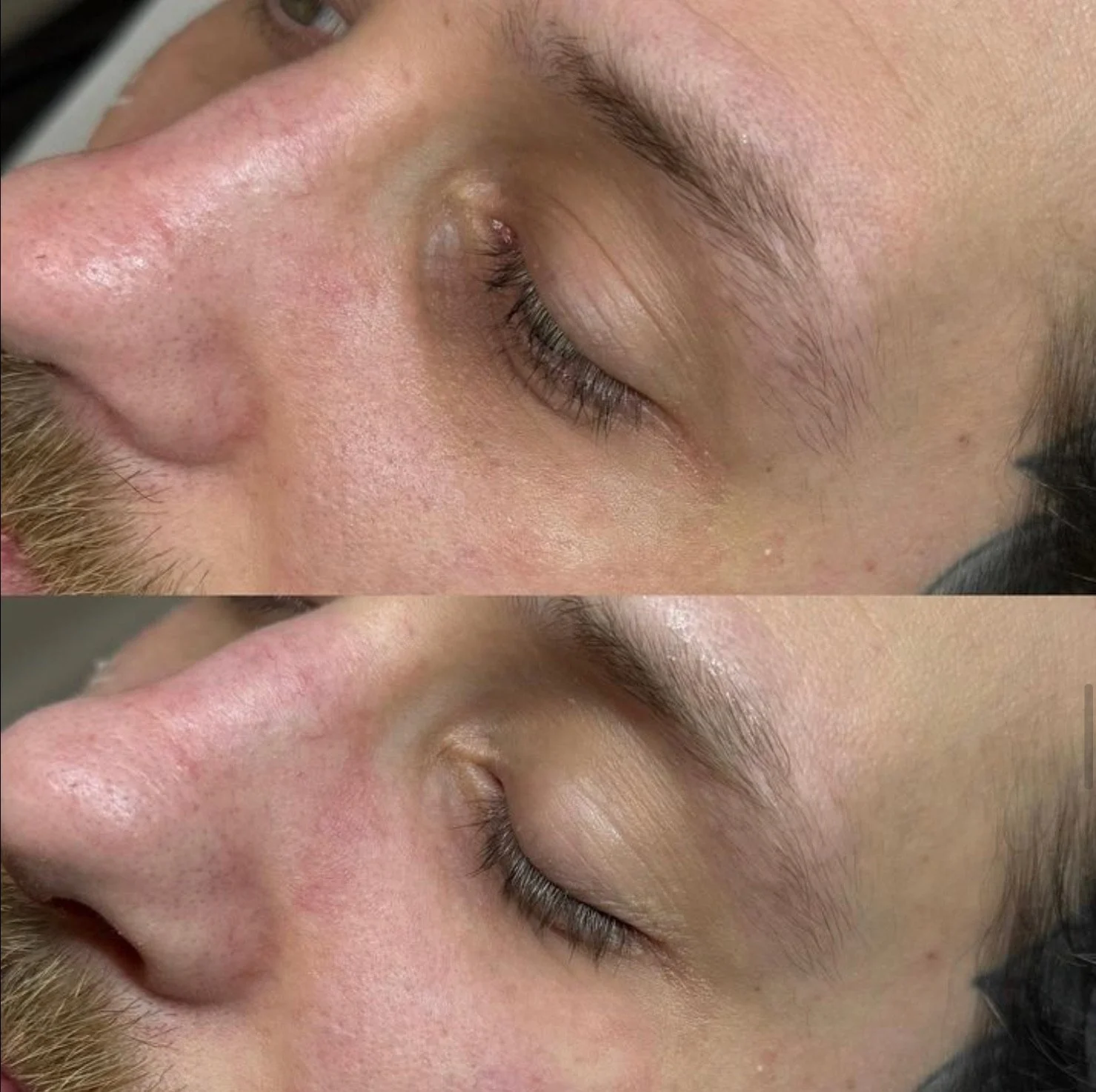
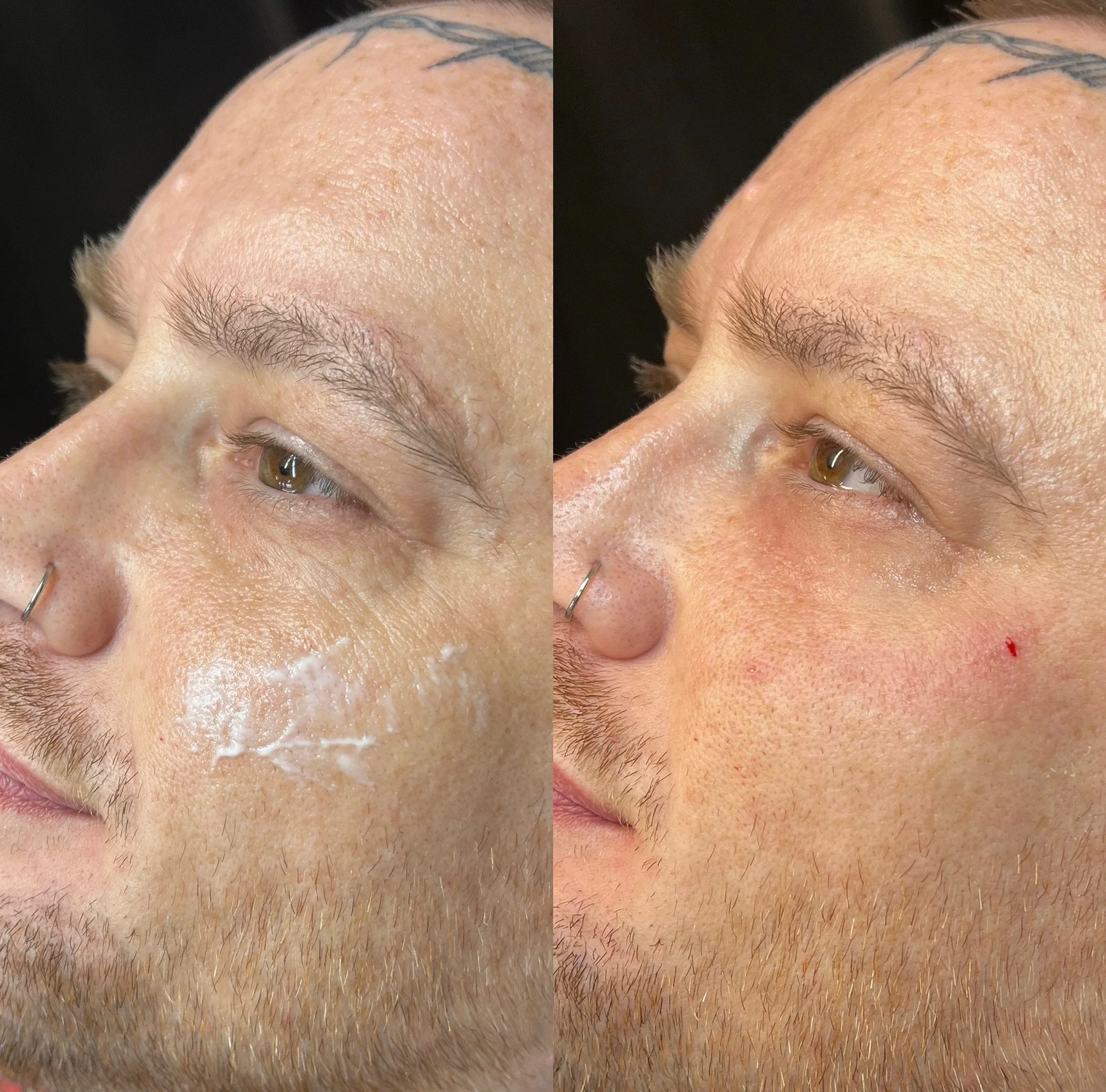
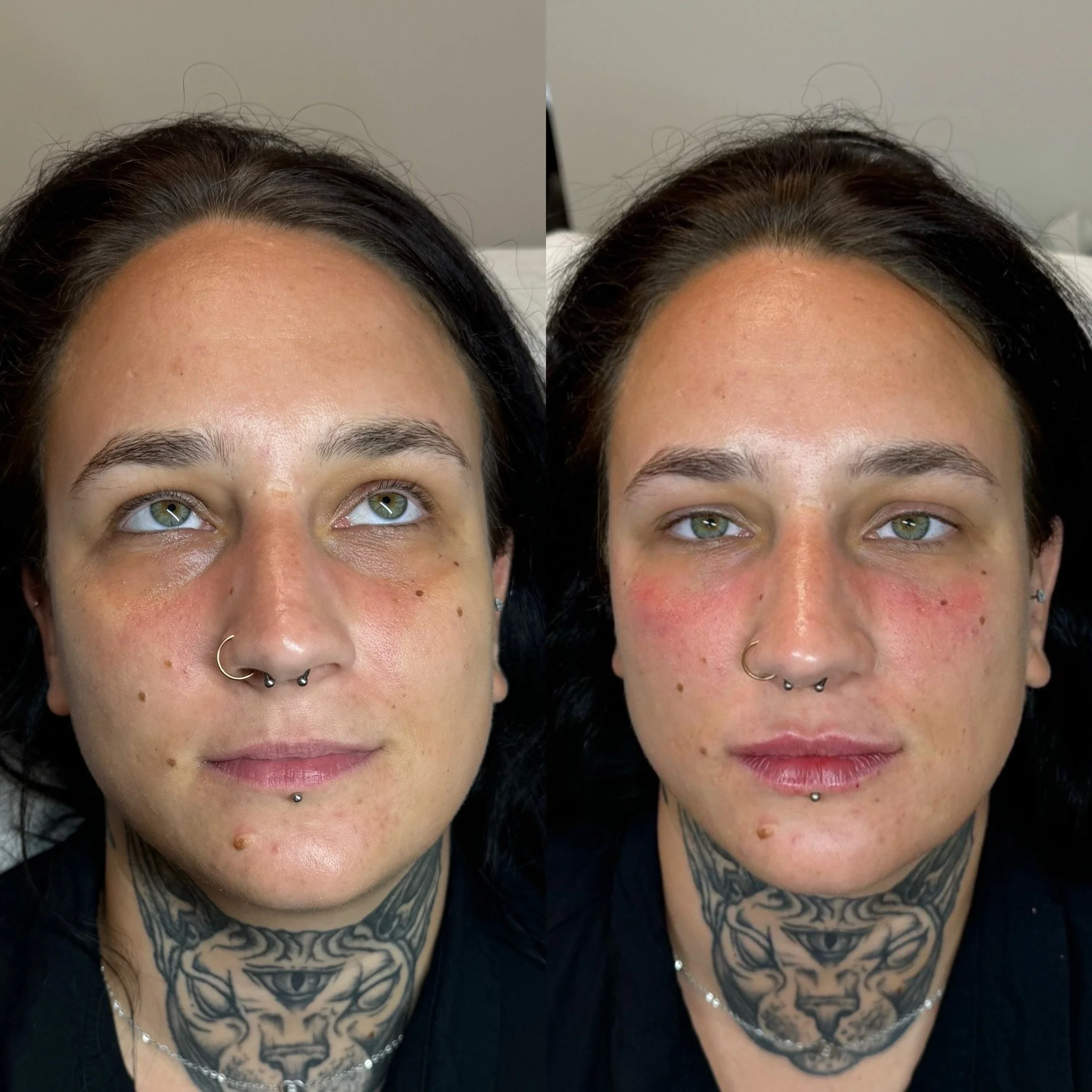
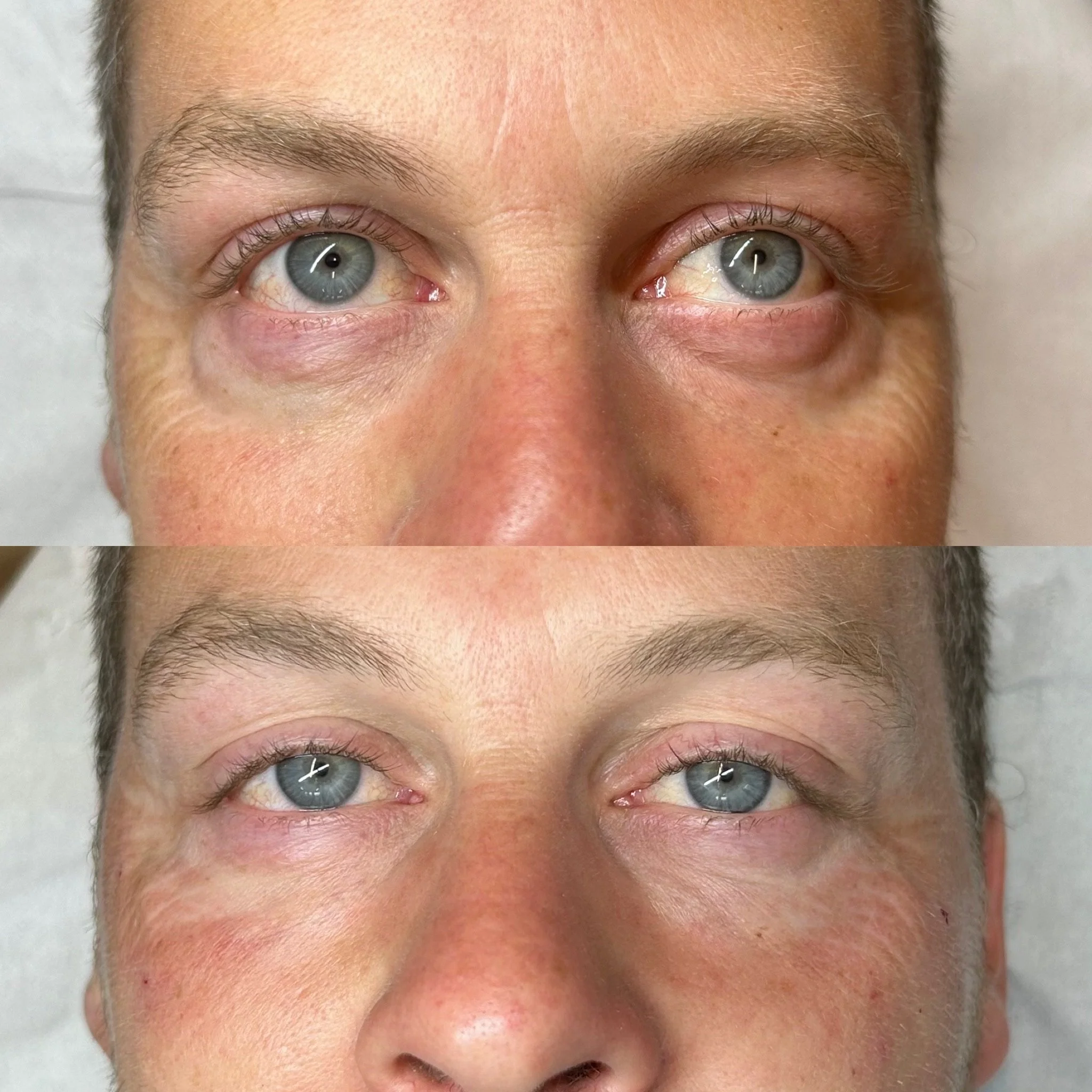
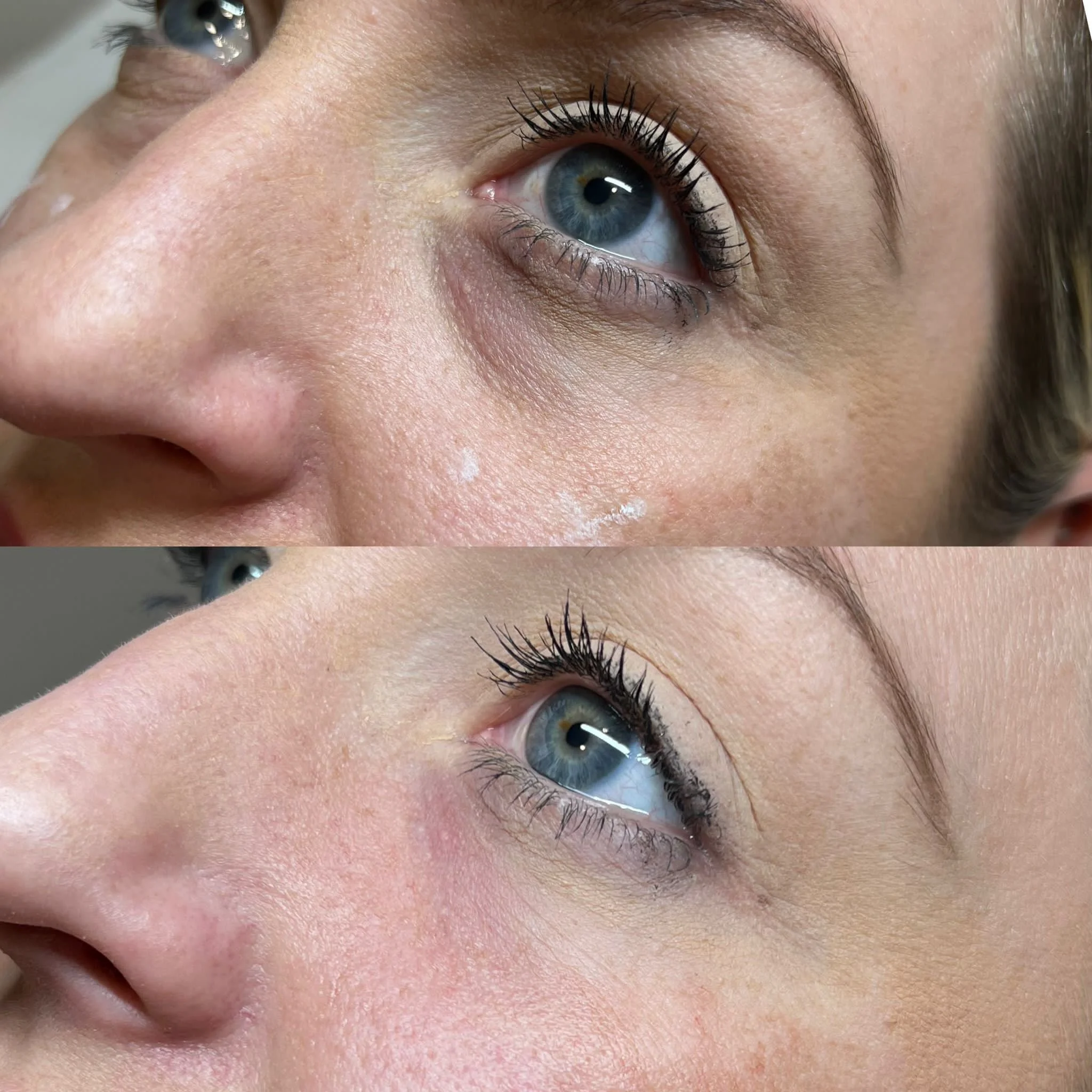
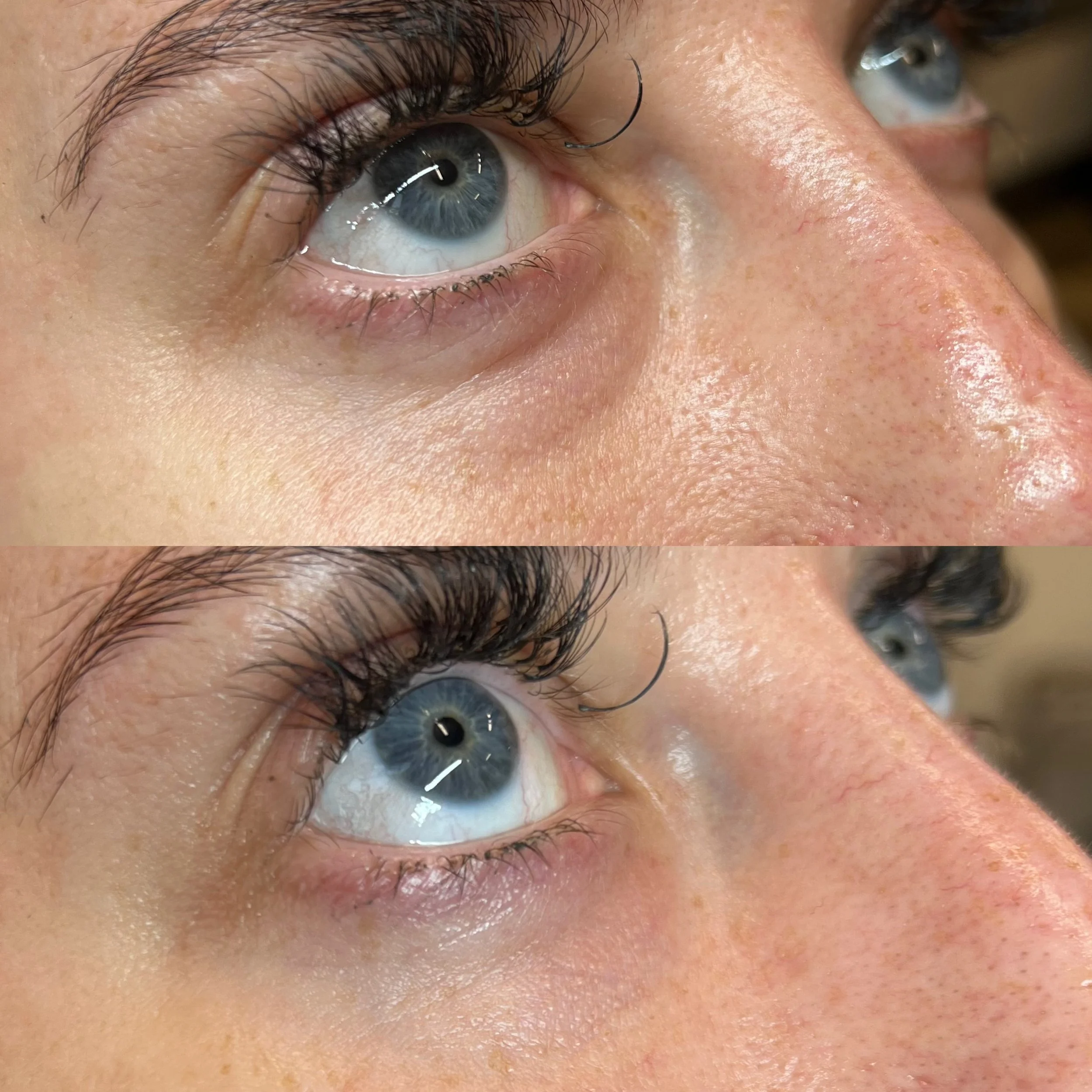
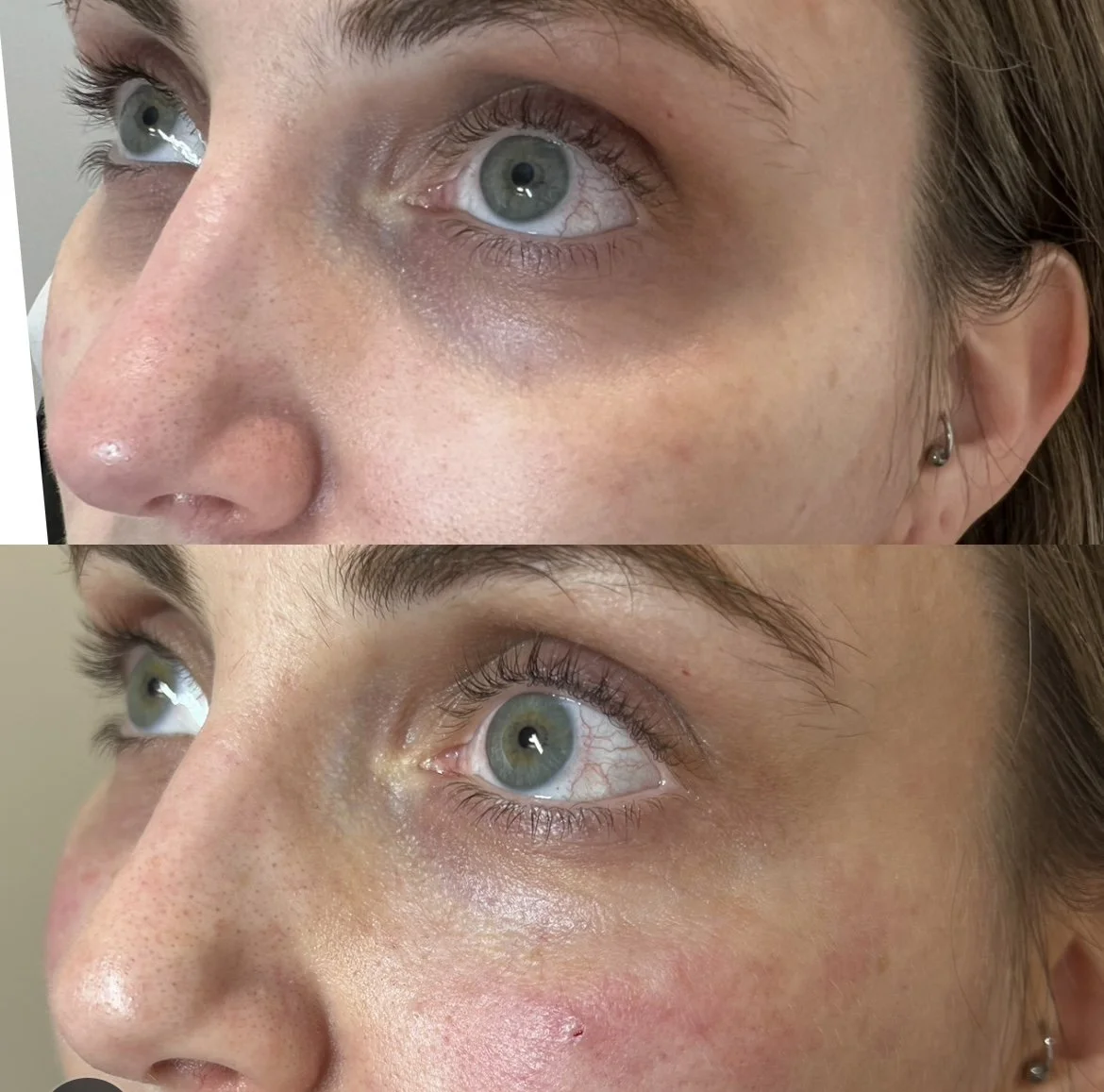
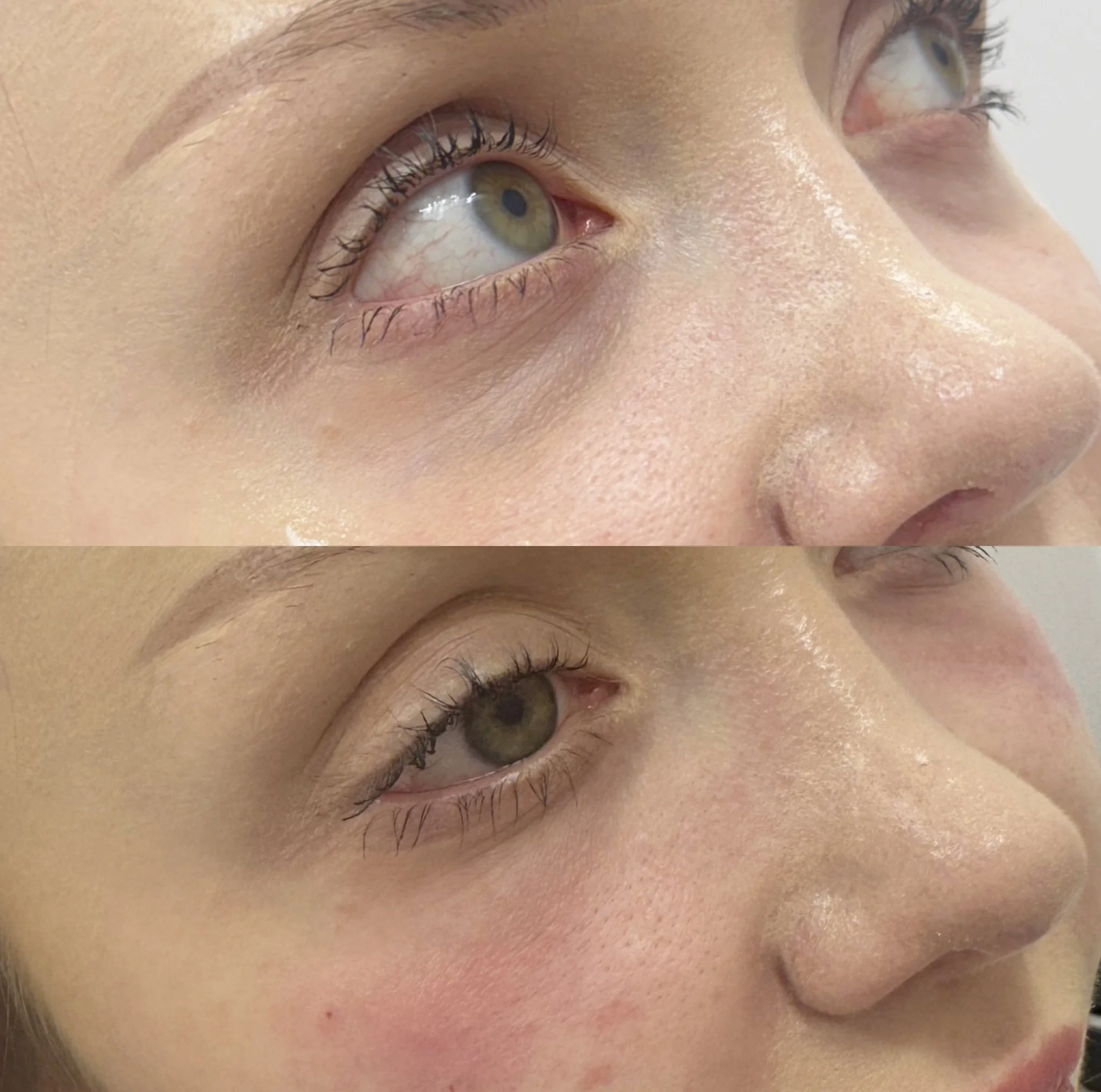
Dark circles, under-eye hollows, fine lines and tired-looking eyes are some of the most common concerns we see at Alien Aesthetics. But not all under-eye concerns have the same cause, and treating them isn't always as simple as adding filler.
The under-eye area is particularly delicate. Changes in facial volume, thin skin, pigmentation and individual anatomy can all affect its appearance, which is why choosing the right treatment matters.
At Alien, we offer several approaches to tear trough and under-eye rejuvenation, including tear trough dermal filler, polynucleotides and PRP (platelet-rich plasma). Dermal filler may be appropriate for certain types of hollowing, while treatments such as polynucleotides can help improve delicate under-eye skin quality, texture and fine lines without adding volume. PRP offers another option focused on supporting the skin's natural repair processes.
Because of the anatomy and risks involved in treating this area, an in-person assessment is required before any tear trough treatment can be approved. We'll assess what's causing your concern, explain the available options and advise if treatment isn't appropriate.
Our under-eye consultations and treatments are available across London, Worcester, Nottingham, Bristol, Southampton and Manchester, subject to practitioner availability.
Tear Trough Filler and Under Eye Rejuvenation Treatments UK
Tear Trough Treatments for Dark Circles and Hollow Eyes
Under Eye Rejuvenation Without Surgery
Treatments for Sunken and Hollow Under Eyes
Under Eye Treatments for Tired Looking Eyes
Dark Circle Treatment and Under Eye Assessment
Under Eye Volume Loss and Skin Quality Treatments
Treatment Options for Crepey Under Eye Skin
Under Eye Fine Lines and Wrinkles Treatments
Under Eye Bags and Puffiness Assessment
Non Surgical Under Eye Rejuvenation UK
Tear Trough Dermal Filler Treatment
Teoxane Redensity II Tear Trough Filler
Hyaluronic Acid Filler for Under Eye Hollowing
Tear Trough Filler for Volume Loss
Under Eye Filler for Hollow Tear Troughs
Tear Trough Filler for Under Eye Shadows
Natural Looking Tear Trough Filler Results
Tear Trough Filler Consultation and Suitability
Under Eye Polynucleotide Injections
Polynucleotides for Dark Circles
Salmon DNA Under Eye Treatment
Polynucleotides for Crepey Under Eye Skin
Polynucleotides for Thin Under Eye Skin
Polynucleotides for Under Eye Fine Lines
Under Eye Skin Quality Improvement with Polynucleotides
Polynucleotides as an Alternative to Tear Trough Filler
Under Eye Rejuvenation Without Adding Volume
PRP Under Eye Treatment UK
Platelet Rich Plasma for Under Eye Rejuvenation
PRP for Under Eye Skin Quality
PRP for Fine Lines Around the Eyes
PRP for Crepey Under Eye Skin
PRP vs Polynucleotides for Under Eyes
PRP as an Alternative to Tear Trough Filler
Tear Trough Filler vs Polynucleotides
Tear Trough Filler vs PRP
Best Treatment for Under Eye Hollows
Best Treatment for Dark Circles Under Eyes
Under Eye Filler vs Skin Rejuvenation Injections
Medical Assessment for Under Eye Treatments
When Tear Trough Filler Is Not Suitable
Tear Trough Filler Risks and Complications
In Person Tear Trough Consultation
Tear Trough Treatments London
Tear Trough Treatments Worcester
Tear Trough Treatments Nottingham
Tear Trough Treatments Bristol
Tear Trough Treatments Southampton
Tear Trough Treatments Manchester
Under Eye Rejuvenation London
Under Eye Rejuvenation Worcester
Under Eye Rejuvenation Nottingham
Under Eye Rejuvenation Bristol
Under Eye Rejuvenation Southampton
Under Eye Rejuvenation Manchester
What causes tear trough hollowing?
What causes dark circles under the eyes?
Can tear trough filler improve hollow eyes?
Can tear trough filler help dark circles?
Can tear trough filler treat under eye bags?
What is Teoxane Redensity II?
How does tear trough filler work?
What are the risks of tear trough filler?
Why is an in person assessment required?
Who is not suitable for tear trough filler?
Can polynucleotides help dark circles?
Do polynucleotides add volume under the eyes?
Can PRP improve under eye skin quality?
Which is better for under eyes PRP or polynucleotides?
What is the best treatment for hollow under eyes?
What is the best treatment for crepey under eye skin?
How long does tear trough filler last?
How long does tear trough filler swelling last?
Can tear trough filler be dissolved?
Tear trough consultation at Alien Aesthetics
Tear Trough
*
Tear Trough *
-
The tear trough is the groove that runs from the inner corner of the eye down towards the cheek. When this area becomes hollow or loses support, it can create shadows that make the under-eye look darker or more tired.
Several factors can contribute to this:
• natural anatomy
• volume loss in the mid-face
• thinning skin
• genetics
• pigmentation
• lifestyle factors such as sleep, stress or allergiesBecause multiple factors can be involved, not every under-eye concern is best treated with filler. This is why proper assessment is essential before deciding on treatment.
-
For suitable candidates, tear trough filler can restore support to the under-eye area and reduce the appearance of hollowing.
At Alien Aesthetics we use Teoxane Redensity II, a dermal filler specifically designed for the delicate under-eye region.
This product has a unique formulation intended to integrate smoothly into the tear trough area, helping to soften the transition between the lower eyelid and the cheek.
Tear trough filler works by:
• restoring volume where hollowing has developed
• reducing shadowing under the eyes
• improving the transition between the eyelid and cheekBecause of the vascular anatomy in this area, tear trough filler should only be performed by experienced medical practitioners with advanced anatomical knowledge.
-
Polynucleotides are an alternative treatment that focus on improving the quality and strength of the skin rather than adding volume.
These treatments work by stimulating tissue repair and collagen production, making them particularly helpful for:
• thin under-eye skin
• crepey texture
• early signs of ageing
• under-eye dullnessPolynucleotides are often recommended when the issue is skin quality rather than volume loss, or when filler would not be appropriate.
-
PRP is another regenerative option for the under-eye area.
This treatment uses your own blood, which is processed to isolate platelet-rich plasma before being injected back into the skin. PRP contains growth factors that can support skin repair and improve overall skin quality.
PRP is often chosen by clients who:
• prefer a regenerative treatment
• are not suitable candidates for filler
• want to improve skin quality around the eyesHead back to our PRP treatment page to learn all about this treatment!
-
The tear trough area is one of the most technically demanding areas in aesthetic medicine. The skin is extremely thin and the region contains important blood vessels that supply the eye and surrounding tissue.
For this reason, we always require an in-person consultation before approving tear trough treatment.
During this assessment we evaluate:
• your under-eye anatomy
• the cause of your dark circles or hollowing
• skin quality
• mid-face support
• whether filler, polynucleotides or PRP would be most appropriateIn some cases we may advise against filler and recommend a different treatment instead.
Our priority is always choosing the safest and most effective option for the individual.
-
Tear trough filler can produce excellent results for the right candidate, but it is not appropriate for everyone. The under-eye area is delicate and the success of treatment depends heavily on anatomy and the underlying cause of the concern.
During your consultation we carefully assess whether filler is likely to improve the area safely.
Tear trough filler may not be recommended if:
• the under-eye concern is caused primarily by pigmentation rather than hollowing
• there is significant under-eye puffiness or fat pads
• the skin in the area is very thin or loose
• there is significant mid-face volume loss that needs to be treated first
• there is existing filler that has migrated or requires correctionIn these cases we may recommend alternative treatments such as polynucleotides, PRP or mid-face support instead.
Our priority is always recommending the treatment that will give the safest and most appropriate outcome, rather than performing a treatment that is unlikely to improve the area.